
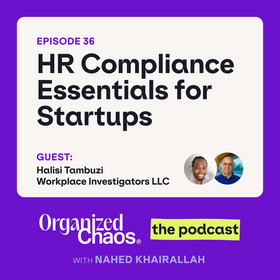

Are you confident that your startup is built on a solid legal foundation? It's a question many founders push aside in the race to build a product and find market fit.
In the latest episode of Organized Chaos, I had an incredibly insightful conversation with Halisi Tambuzi, a seasoned workplace investigator and HR compliance expert. We explored the common but dangerous HR pitfalls that startups often fall into, why the "we're too small for rules" mindset can lead to disaster, and when you absolutely must start paying attention.
We demystified the often-intimidating world of HR compliance, providing a clear roadmap for founders who want to build great companies the right way. This is a must-listen for anyone leading a team, no matter how small.
When is the Right Time for HR Compliance?
One of the most pressing questions for any founder is when to shift focus from product and growth to internal processes and compliance. Halisi clarified that this isn't a matter of company size or funding stage but is triggered by specific events. The moment you hire your first employee, you are officially an employer with legal obligations. This includes everything from proper onboarding and payroll to understanding wage and hour laws. The complexity multiplies as your team grows, with different regulations kicking in at thresholds like 5, 15, or 50 employees.
Our conversation stressed that waiting for a problem to arise is the most expensive strategy. Setting up a basic but solid HR framework early on is an investment that protects the company from future legal battles, reputational damage, and internal chaos.
Key Takeaway: HR compliance begins with your first hire. Proactively establishing clear policies and documentation from day one is far more efficient and cost-effective than reacting to a crisis. Don't wait for a lawsuit to force your hand.
Common Mistakes That Lead to Workplace Investigations
Halisi shared eye-opening stories from his work as an HR investigator, pinpointing the recurring mistakes that escalate into serious conflicts. A major theme was the failure to document. Verbal warnings, informal performance discussions, and vague feedback create a "he said, she said" environment that is impossible to navigate when a dispute occurs.
Another critical error is inconsistent application of policies. When one employee is disciplined for something that another was let off the hook for, it opens the door to claims of discrimination and favoritism.
Other common missteps include misclassifying employees as independent contractors to avoid paying benefits and payroll taxes, failing to engage in the interactive process for disability accommodations, and managers who lack the basic training to handle sensitive employee issues. These are legal landmines that startups should not take lightly.
Key Takeaway: Consistency and documentation are your greatest allies when it comes to HR compliance. Every significant employee interaction, from performance reviews to disciplinary actions, must be documented. Ensure your policies are applied fairly and uniformly across the entire organization to build trust and minimize legal risk.
The Future of HR: AI, Remote Work, and New Challenges
We also looked ahead, discussing how technology and the rise of remote work are reshaping the HR compliance landscape. While AI tools can be incredibly helpful for streamlining HR tasks, they also introduce new risks, particularly around data privacy and potential algorithmic bias in hiring or performance management. As Halisi noted, you cannot simply "set and forget" an AI tool; you are still responsible for its outputs and any discriminatory impact it may have.
Similarly, managing a distributed workforce creates unique challenges for maintaining a consistent culture, handling investigations remotely, and complying with the patchwork of state-specific employment laws. An employee working from Colorado is subject to different leave and pay laws than one in California, and companies must be equipped to manage this complexity. And that complexity increases exponentially if you have international employees!
Key Takeaway: Technology and remote work are powerful enablers, but they are not a substitute for thoughtful HR strategy. Leaders must stay informed about the evolving legal landscape and be deliberate in how they implement new tools and manage their distributed teams to ensure fairness and compliance.
My Final Thoughts
My conversation with Halisi reinforced my belief that a strong, compliant people function is not a cost center but a core competitive advantage. Here are some my thoughts after reflecting on the conversation:
- Getting Started with HR Compliance: Halisi’s point that compliance starts with employee number one is fundamental. I have seen too many companies try to reverse-engineer HR policies and processes after a crisis, and it is always more painful and expensive. Building a simple, compliant foundation from the beginning is one of the smartest investments a founder can make.
- Documentation is Key: Halisi’s emphasis on documentation and consistency resonated deeply, and if you’ve been following this newsletter for a while, you’ve already heard me talk about this in different contexts. In HR, you never want to deal with the mantra "if it wasn't written down, it didn't happen." Clear documentation is there to protect both the employee and the company. Clear, documented processes are the bedrock of a healthy and equitable workplace, so don’t kick the can down the road because it’ll cost you more than you can imagine down the line.
- HR Compliance is not Static: The discussion about AI and remote work was a powerful reminder that our field is constantly evolving. As leaders, we cannot afford to be passive. We must be curious, diligent, and critical thinkers, embracing new technologies while remaining vigilant about the ethical and legal responsibilities that come with them.
Ultimately, Halisi’s insights confirmed that building a great business requires more than just a great product. It requires building a great organization, and that starts and ends with how you treat your people.