
Renaming HR to People Ops Won't Make You Strategic
- 28 Apr 2026
- 6 mins

Gartner dropped its 2026 CHRO Priorities report a few months ago and the headline stat has been making the rounds on LinkedIn. Evolving the HR operating model has the highest predicted impact on AI productivity gains at 29%. That number was pulled from a survey of 426 CHROs across 23 industries. It's real, it's significant, and the instinct behind it is correct. The HR function has to evolve.
Here's the problem I keep running into. The way the industry is interpreting that signal is lazy. Companies are rebranding HR to People Operations, changing business cards, updating Slack channels, and calling the job done. That is cosmetic work dressed up as strategic work. And for early-career HR folks at startups, the rebrand narrative is quietly pointing your attention away from the behaviors that actually move you into the strategic seat. In the next few minutes I'm going to show you where this narrative comes from, who benefits from it, and the specific moves that earn you a seat at the table when you don't have the cover of a new title.
Why The Rebrand Has Become Theater
Most of the content you'll find online explaining the difference between HR and People Ops is written by HRIS vendors. BambooHR, Factorial, Workable, Eden, HR Cloud, Reverb, and a handful of others dominate the search results on every variation of "should I rebrand HR to People Operations." Look at any of those pages and you'll see the same template. Define HR as administrative, define People Operations as strategic, conclude that People Ops is the evolved form, point the reader to the software.
There's a commercial reason this narrative is everywhere. Vendors make more money when companies believe they are "modernizing." The "becoming strategic" story sells more software licenses, more implementations, and more professional services. I'm not saying the vendors are wrong about everything. I'm saying you should recognize that the most widely distributed explanation of what HR should be comes from companies with a direct financial interest in you feeling underdeveloped.
Then there's the enterprise framework problem. Gartner's prescription is to turn HRBPs into "strategic talent leaders," CoEs into "custom HR product designers," and HR Ops into "digital HR solutions and delivery." That model may work for a Fortune 500 with 40,000 employees and a 300-person HR function. It does not map cleanly onto a 120-person startup with one HR lead and a part-time recruiter.
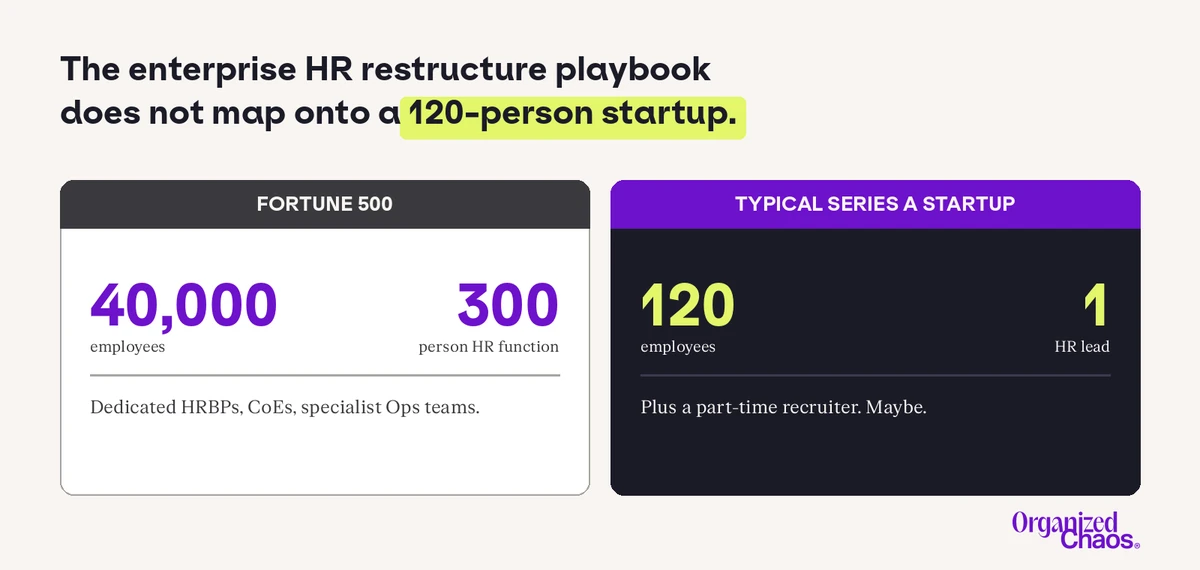
AIHR reports that 89 percent of HR functions have restructured or plan to within two years. A large portion of those are going to be startups copying an enterprise HR function restructure playbook into a context that cannot support it.
And here's where it hits you directly. Early-career HR professionals are chasing the title change instead of building the underlying skill. The title is visible. It shows up on your LinkedIn. It earns compliments in networking chats. The skill work, reading financials, building business cases, pushing back on bad hiring decisions, is invisible. Nobody posts a carousel about the quarter they spent reading every board deck before they opened their mouth in a leadership meeting.
What The Shift Looks Like For a Startup HR Person
The Josh Bersin Company ran a study that put only 11 percent of HR functions at the highest strategic maturity level. Those top-tier teams were twice as likely to exceed financial targets, twelve times more likely to hit high workforce productivity, and seven times more likely to adapt well to change.
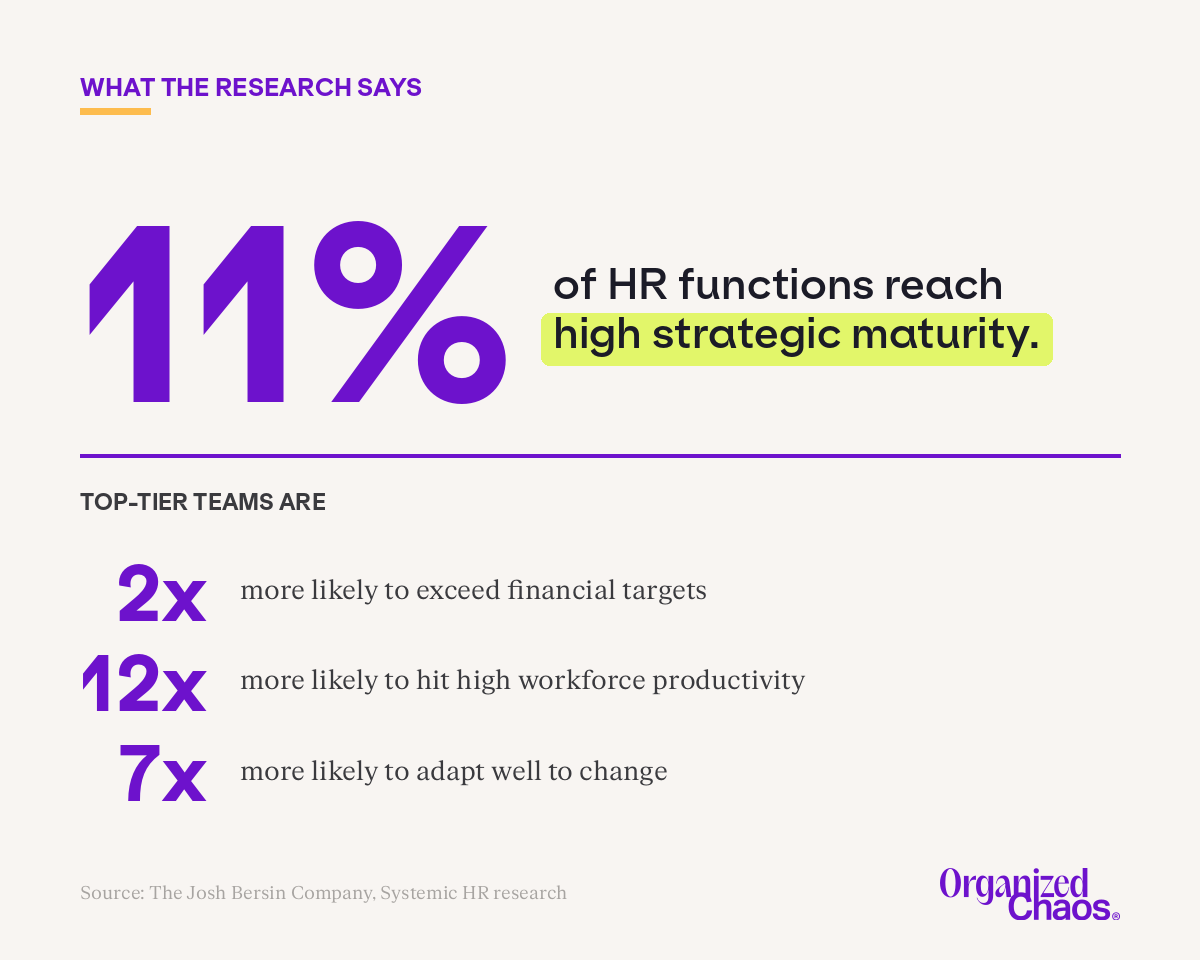
Notice what's missing from that research. There is no variable measuring what the function is called. Maturity comes from the behaviors the team demonstrates. The name on the org chart is irrelevant.
If you want to move into that 11 percent, here are four moves you can make this quarter without any title change.
Walk into next week's leadership meeting with a headcount-to-revenue ratio instead of an engagement survey summary. Know your revenue per employee as a trend over the past year or two as opposed to a snapshot. Know your payroll as a percentage of revenue. Bring those numbers into the conversation before anyone has to ask for them.
Tie every HR initiative you propose to a specific business metric before you present it. If you can't connect your idea to revenue, margin, churn, ramp time, or runway, the idea isn't ready. Do the work to make that connection before you walk into the room.
Stop owning projects that should sit with line managers. Onboarding execution, performance conversations, goal-setting, team development. Those belong to the manager, with your support. Every time you take ownership of work that isn't yours, you're training the company to treat HR as an administrative function. You can't earn the strategic HR business partner seat while running the admin desk.
Say no to the first hiring request that lands on your desk without a clear revenue rationale. Then say no to the second one. Make the business justify headcount the same way it would justify any other material expense. This is one of the fastest ways to earn CEO credibility, and it's the exact framework I walked through in my episode on workforce planning.
Who The Rebrand Actually Benefits
When Laszlo Bock retitled Google's HR function to People Operations in the mid-2000s, that rename was the surface expression of a much bigger shift in how Google was actually operating. The same team that renamed itself also redesigned maternity leave in 2007 based on retention data. They rebuilt hiring around structured interviews and objective scoring rubrics. They invested heavily in people analytics. The label stuck because the work behind it was real.
Most companies that copied the rename since then skipped the part where the work changes. It’s like we adopted the labels but not the behaviors that create real change.
So who actually benefits when the industry frames the rebrand as the upgrade? HRIS vendors, for the reasons I walked through earlier. Enterprise HR consulting firms that sell expensive restructuring engagements to companies who'd get more value from process and behavior work. The conference circuit that packages all of this into talks, certifications, and panels. None of these players are acting in bad faith. The incentives in the ecosystem just don't align with what most startups actually need, and you should factor that in when you read the next "HR is dead, People Ops is the future" post on LinkedIn.
What To Do This Week
Here are the specific moves that I recommend you make.
First, audit the last five HR initiatives you proposed or supported. Next to each one, write the business metric it moved. If you can't name the metric, either you didn't have a clear thesis or the initiative wasn't strategic.
Second, get your hands on your company's last three months of financials and your current operating plan. Read them until you understand the story they tell. If your CFO or operating lead will walk you through them, then by all means ask. You cannot build a startup HR strategy if you don't speak the business's language.
Third, block an hour this week to rewrite the intake process for hiring requests. Require a revenue rationale, a capacity versus capability classification, and a process optimization check before any request reaches you for approval. This is where HR earns strategic credibility faster than any other single change you can make.
Fourth, stop pushing for a title change. Put that energy into the three moves above. The title does not matter and it never will.
If you want a structured way to build these muscles, these are just some of the things I cover in The Startup HR Operating System. And if you're a founder reading this and recognizing that your HR function is stuck in the rebrand cycle, a short HR Sprint is usually enough to expose where the actual gaps are.