
Why Job Descriptions Are Broken (And How to Fix Yours)
- 09 Jun 2026
- 7 mins

The average job description does the opposite of what it is supposed to do. It repels the strongest candidates and attracts the weakest. Companies post a wall of generic responsibilities and inflated requirements, then complain that they cannot find good talent. The talent is there, but it’s your JD that is the problem.
I have reviewed thousands of startup job descriptions over the past 15 years, and I regularly see these common issues: phrases that are too vague, checklists of requirements that don't always make sense, and lists of "key responsibilities" that could describe any role at any company.
The traditional JD format is dead because the candidates you actually want to hire, those great performers that can take your company to the next level, are not applying to jobs that are stuck in the early 2000s.
Here is what is broken, what to do instead, and the format that I’ve seen work for early-stage hiring.
The Copy-Paste Problem
Most startup JDs are a copy-paste job from a competitor's posting, which was a copy-paste from their competitor's posting, which originated from an enterprise template in 2014. This means that most job descriptions across the startup ecosystem read the same. They have similar language, structure, bullet points, and boilerplate sections. This is no different for AI-generated job descriptions either.
If your JD looks like every other JD out there, then your company looks like every other company too. You have made it impossible for the candidate to figure out why they should care about your role over the 50 others sitting in their LinkedIn feed.
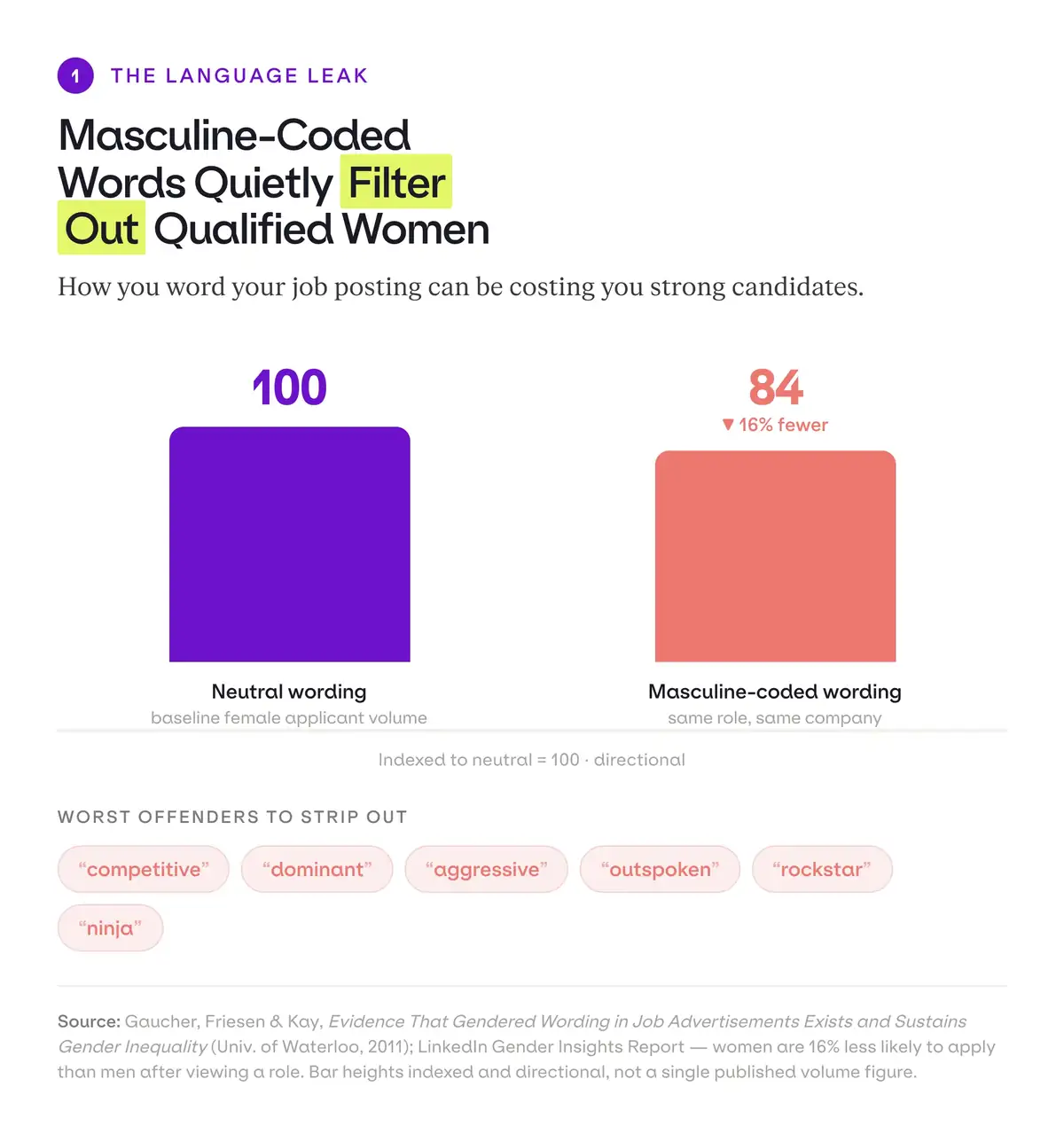
When you do this, qualified candidates see your company as just another generic employer and move on. You’re not memorable or interesting so your job posting’s click-through-rate (CTR) on qualified candidates is in the toilet. Most companies blame this on a thin talent market, but the problem is that your jobs sound like a template that candidates just ignore.
Here’s a specific example. I worked with an early-stage tech startup that was struggling to hire a Senior Product Manager. Two months in, they had screened 50+ candidates and offered the role to two, who declined. We rewrote the JD and stripped out the generic responsibilities. We replaced them with the real outcomes the role would own in the first 90 days. Then, we removed some of the "nice to have" requirements that were filtering out strong candidates with non-traditional career paths. Within 3 weeks, they had four qualified candidates in the final rounds and hired one of them shortly after. This was the exact same role but positioned differently with a rewritten JD.
What Candidates Want to Know from Your JD
It takes most candidates only 14 seconds to decide whether to keep reading your job post or move on.
I’ve spoken to thousands of candidates over the past 15 years, and the top performers generally want your JD to answer the following 5 questions:
- What problem am I being hired to solve?
- What does the next 12 to 24 months look like for this company?
- How will I be measured?
- What is the comp and is there equity upside?
- What is broken that I would be expected to fix?
If your JD does not answer these questions in the first 15-30 seconds of reading, you have lost the candidate. They have already moved on to the next posting.
The "Anti-JD" Format That Works
The format that wins at startups looks nothing like the traditional JD. It is shorter, more specific, and reads like a memo from the CEO rather than a template from HR.
Here is the JD structure that consistently outperforms others based on my personal testing with tens of startups throughout the years:
Hook. The opening paragraph needs to hook the candidate by making the case for why this role, why now, and why this company. State the business problem the role is being hired to solve. Be specific. "We are scaling from $4M ARR to $15M in the next 18 months and we need a marketing leader who can build a demand engine from scratch" is a hundred times more effective than "We are looking for a marketing leader to drive growth."
Outcomes. Include 5 to 7 specific outcomes the candidate will own. Stay away from generic responsibilities like "manage X." Focus on outcomes like
- Hit $1.5M in marketing-sourced pipeline in your first 90 days.
- Build and ship our category positioning by the end of Q2.
- Launch and scale paid acquisition with a target CAC of $400 and payback of nine months.
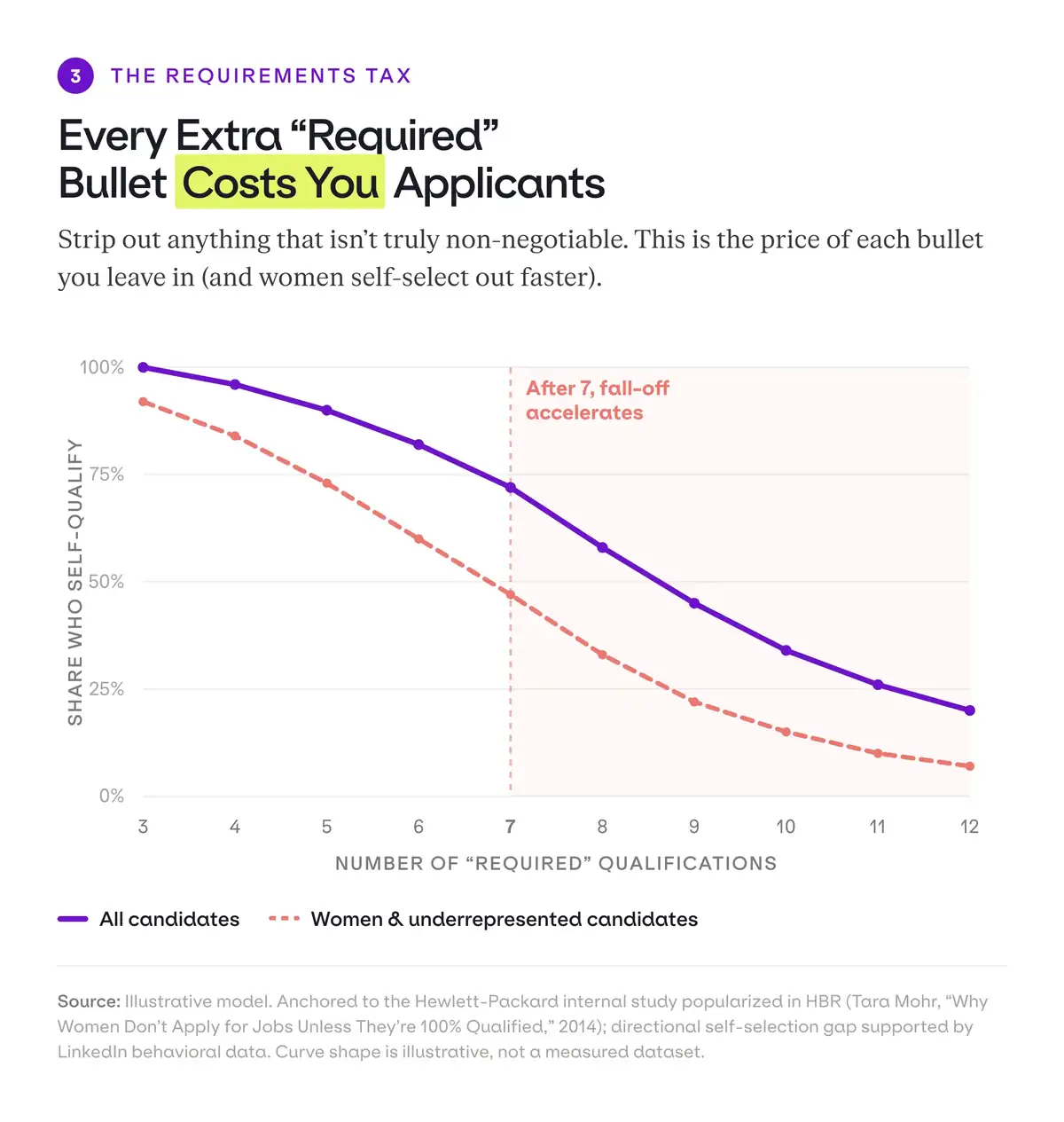
What we look for. Focus on your 3 to 5 non-negotiables. These can include skills, experiences, and demonstrated outcomes from past roles. Skip the years-of-experience requirement because relevance and quality of work are more important than years. An HR professional who has worked at early stage startups for 5 years and owned strategy and execution will always outperform someone who has 15 years of experience at traditional compliance-focused HR.
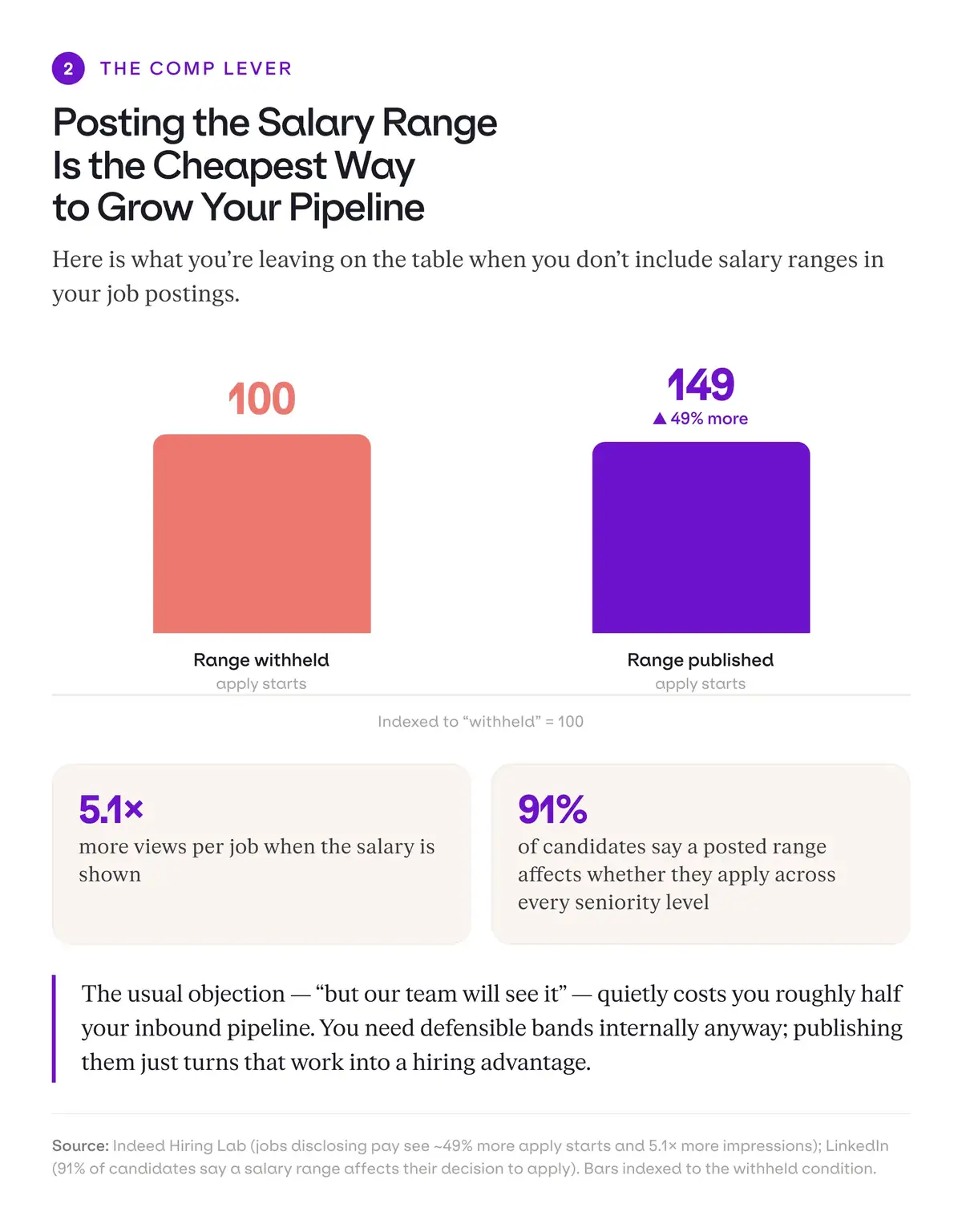
What we offer. Give the actual comp range your company has set. Please do not include ridiculous ranges like $150k to $300k based on experience, because they say nothing good about your company. If you offer equity, present it in real numbers using shares, percentage, strike price (if applicable), and vesting schedule. Don’t forget to include your benefits, remote work/hybrid policy, and the growth opportunity within the company.
What this role is not. This section is a differentiator. It tells candidates what they will not be doing, who they will not be reporting to, and what they will not own. This filters out misaligned candidates and gives the right candidate clarity. "This is not a brand marketing role. You will not own design. You will not have a team to manage for the first 6 months."
A note from the founder. A short paragraph, written by your founder, that explains why they are hiring for this role. What are you looking for that you cannot describe in a checklist? What will success in this role unlock for the company? Answer these questions in this section to give candidates a better understanding of why this role exists right now and the impact it will have.
Although this format is shorter than the typical JD, it takes longer to write because you have to actually think about the role in greater depth. That is the whole point. If you cannot answer "why this role, why now" in a short and coherent document, then you should not be hiring for it yet.
What This Means for How You Hire
If your inbound pipeline on a critical role is weak, do not just blame the market and call it a day. Rewrite the JD using the guidelines mentioned above.
Every JD you post should pass three tests:
- Can a candidate, in 15-30 seconds, figure out why this role matters and why this company matters?
- Are the outcomes specific and measurable?
- Does the writing sound like a human or a template?
If the answer to any of those is no, then rewrite your JD before posting it.
Summary and Action Items
The traditional JD format doesn’t work for early stage startups because it was designed for enterprise hiring. Top candidates filter out these generic JDs within seconds and don’t apply, so you’re losing out on talent that can have an outsized impact on your company’s growth. The format that improves your inbound pipeline is shorter, more specific, outcome-driven, and reads like a memo from the CEO.
Here is what to do this week:
- Pull up the JD for your highest-priority open role. Read it as if you were a candidate scanning 50 postings. Would you apply?
- Rewrite the opening paragraph to state the actual business problem this role is being hired to solve.
- Replace your bullet list of responsibilities with 5 to 7 specific outcomes. Outcomes are measurable. If you cannot put a number or a milestone on it, it is not an outcome.
- Strip out any requirement that is not truly non-negotiable. These filters disproportionately remove strong non-traditional candidates.
- Add a "What this role is not" section. Force yourself to articulate what the candidate will not be doing. This section is the biggest differentiator and will separate your jobs from all the generic ones out there.
- Share the rewritten JD with one person you trust who has nothing to do with the role. If they cannot tell you what the role is and why it matters after one read, it is still broken.
Share this newsletter with your hiring managers. The conversation that follows will be worth more than any recruiting agency you could hire.