

Resetting Performance Goals for AI-Augmented Teams
- 04 Aug 2026
- 5 mins

In Q4 of last year, an HR leader I know attended a tense performance review meeting. One engineering manager wanted to give an employee an 'exceeds expectations' rating because their output had doubled. Another manager disagreed, pointing out that the increase was just from using ChatGPT, while the employee's poor design choices had caused two production errors. Because the team lacked a framework to resolve this kind of conflict, the discussion quickly broke down into an argument about fairness.
If you haven't faced this situation yet, you will soon. In an AI-driven workplace, performance reviews often turn into arguments your current goal system can't solve.
I recently published a four-part framework covering outcomes, verification, judgment, and capability in this article.
This edition focuses on how to guide your team through the goal-reset process.
Both Managers Are Right and That’s the Problem
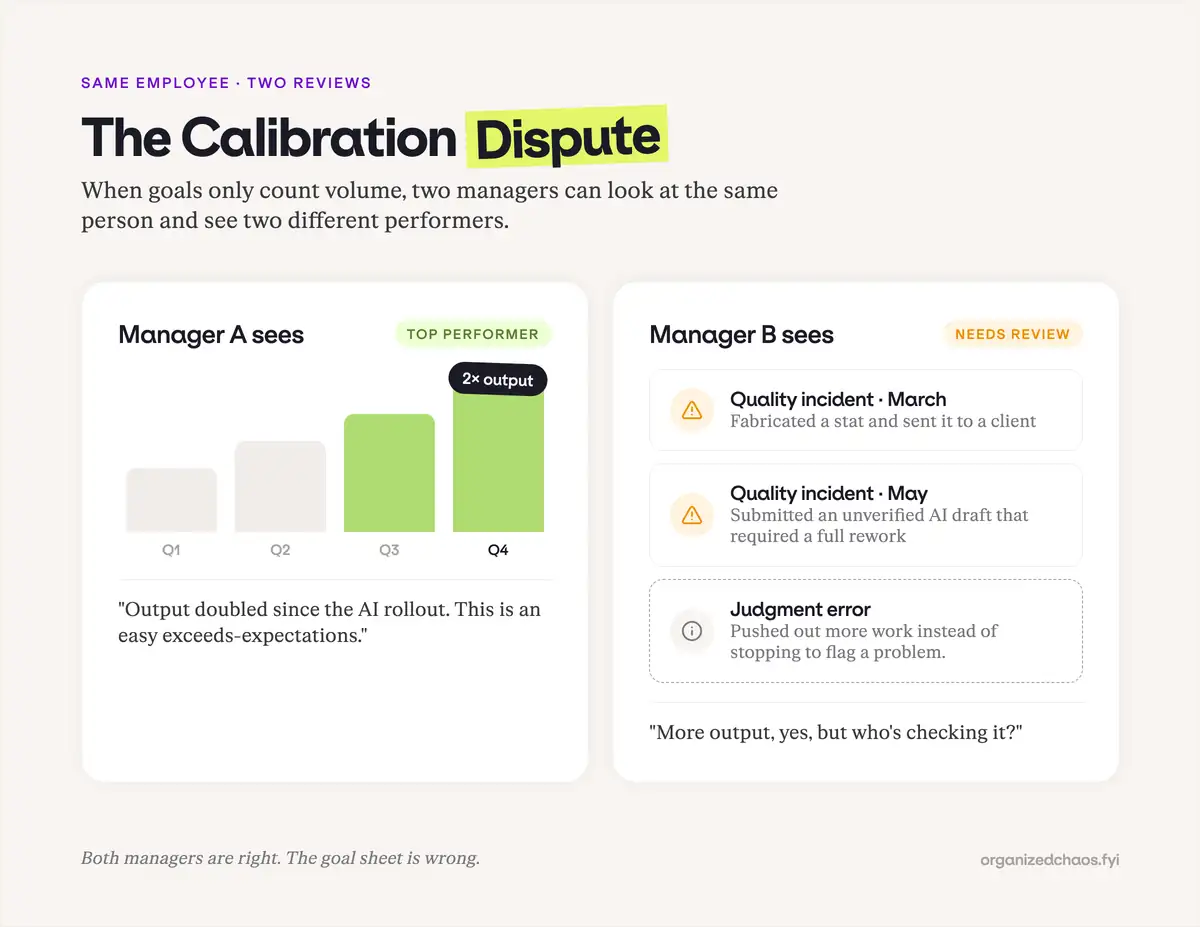
Most performance disputes moving forward will boil down to the same issue: your goals measure output volume, but AI has taken over most of that work. One manager looks at the numbers while the other looks at the decisions behind them. Both are right, yet they are describing the same employee. Until the goals change, you will keep settling disagreements that have no correct answer in your current performance system.
Stop trying to resolve these disputes during the review cycle. You cannot fix a broken measurement system through calibration. Instead, acknowledge that your current system is transitional, document where the goals failed, and use that data to drive your reset.
The Reset Is a Change Program, and You Own It
Rolling out new goal categories is simple; managing the change is hard. When you reset targets, your team will worry that you're just raising the bar to justify layoffs. In today's climate, that's their default assumption.

Here is how to handle it:
- Be honest about the goals. Before moving targets, leadership must clearly state what AI productivity gains will fund: whether that’s growth, new projects, profit margins, or headcount changes. If the goal is headcount reduction, be upfront. It is better to own the message than to have it leak.
- Be transparent about measurement. Tell teams you are tracking AI-assisted output to set a baseline. More importantly, promise that this data will not impact current performance ratings. If you announce this after the fact then it feels like surveillance.
- Give managers a clear script. They will handle these resets in 1:1 meetings. Don't leave them to improvise. Provide a simple guide explaining what changed, why it’s happening, what the employee gains, and how raises and promotions work now.
- Share the gains fairly. If team capacity rises by 30%, don't raise targets by 30%. Raise them by 15% and dedicate the rest to quality and complex work. If you adjust targets, update pay and bonus thresholds, and roll them out on the same day. Your team will do the math immediately, so make sure the changes look fair from the start.
What This Does for Your Seat at the Table
Do this right, and you’ll earn more credibility than any other project you deliver this year. You’ll head into executive meetings armed with role-specific productivity data that no one else has. You’ll know exactly who is worth promoting. And when the board asks how AI is affecting your output, you’ll have a clear, evidence-based answer. This changes the conversation during headcount planning, allowing you to make strategic decisions about funding growth rather than just making reflexive cuts.
Action Items for This Week
- Audit your goals. Ask: "If AI did 80% of this work, would this goal still capture the person's value?" Bring the goals that fail this test to your next leadership meeting.
- Identify your pilot group. Ask managers to point out employees whose performance has become difficult to measure. Use these roles to test the new framework.
- Prepare your managers. Draft a simple guide explaining the changes before you announce anything to the wider team.
- Run a test audit. Download the AI-Era Goal-Setting Worksheet and audit one team this month.